Medical Gas Piping Installation Under NFPA 99: A 2026 Guide
A field-level guide to medical gas piping installation under NFPA 99: risk categories, ASSE 6010 installers, what to check above the ceiling, the test and verification sequence, and Florida AHCA plan review.
In March 2001 the U.S. Food and Drug Administration reported that, over the previous four years, it had received reports of 7 deaths and 15 injuries to patients who were thought to be receiving medical oxygen but were connected to a different gas, usually nitrogen [11]. In July 2016 a newborn at Bankstown-Lidcombe Hospital in Sydney died after being resuscitated from a wall outlet labeled oxygen that was piped to nitrous oxide; the cross-connection came from a July 2015 installation and survived the testing and commissioning that followed [12]. Medical gas piping is one of the few building systems where an installation error reaches a patient directly, which is why NFPA 99, the Health Care Facilities Code, treats medical gas piping installation differently from ordinary plumbing.
This guide takes owners, general contractors and engineers through NFPA 99 medical gas requirements in the order a project meets them. It is a checklist, not a substitute for the adopted code text or your authority having jurisdiction.
Before you begin: what counts as a medical gas or vacuum system
NFPA 99 applies its medical gas and medical support gas provisions to piped oxygen, nitrous oxide, medical air, carbon dioxide, helium, nitrogen, instrument air and mixtures of them [5a]. Nitrogen and instrument air used to dry instruments or drive surgical tools and booms are medical support gases rather than gases a patient breathes [5n]. The code also governs medical-surgical vacuum and waste anesthetic gas disposal (WAGD), the suction that collects anesthetic gas at the point of use [5n].
Have these before the first joint is brazed:
- The adopted and enforced code editions (Step 1) and the facility's risk assessment for each space served.
- Drawings showing every outlet, riser, zone valve, alarm panel and source.
- Installer ASSE 6010 certifications and brazing qualification records.
- The name of the independent verifier and who hired them.
Step 1: Confirm the risk category and the code edition that governs
NFPA 99 sorts systems by what happens when they fail. Category 1 systems are those "whose failure is likely to cause major injury or death of patients, staff, or visitors." Category 2 failures are likely to cause minor injury, Category 3 failures can cause discomfort but not injury, and Category 4 failures "would have no impact on patient care" [1]. The category comes from a documented risk assessment of each space, not from the building type [1]. Operating rooms, intensive care and emergency departments will be Category 1, and Category 1 medical gas carries the full source, zone valve, alarm and verification requirements below.
Edition matters as much as category. NFPA's current edition is 2024, which added a required auxiliary connection for a temporary supply on every medical gas and vacuum system, a pressure-loss calculation capped at 10 percent, a cryogenic liquid piping section and a reference to ASSE 6060 for designers [4]. Yet the Centers for Medicare & Medicaid Services still enforces the 2012 edition, adopted in a final rule effective July 5, 2016 [3][4], and state codes adopt their own. Build to the most restrictive requirement and record the decision.
Step 2: Define the medical gas scope at pre-construction
Make medical gas its own written package and settle these before contracts are signed:
- System list and category for every gas and vacuum service, including WAGD and instrument air.
- Source equipment: who furnishes, installs and starts up the oxygen supply, medical air compressors, vacuum pumps and the emergency oxygen supply connection.
- Alarms: master, area and local panels, the wiring between them, and the electrical contractor's role [5d].
- Tie-in points to existing systems, with the facility's shutdown windows attached.
- Who hires the verifier. NFPA 99 requires system verification by an independent party other than the installing contractor [7]; New Mexico also bars verifiers who work for the design professional or manufacturer [8]. Hire or approve the verifier directly; the owner has the most to lose from a soft report.
- Closeout: verifier report, as-builts, brazing records and manufacturer instructions left with the owner [5m].
Step 3: Qualify the people, from ASSE 6010 installers to 6040 maintenance
ASSE/IAPMO/ANSI Series 6000, now in its 2024 edition, is the professional qualifications standard NFPA 99 relies on for medical gas personnel [2]. Four of its standards matter most during construction:
- ASSE 6010, Medical Gas Systems Installers. NFPA 99 requires installers of piped distribution systems, and of piping for pump, compressor and manifold sources, to be certified to ASSE 6010 [5h]. Brazers must be qualified under ASME Section IX or AWS B2.2, with records on site before installation starts [5h][5i].
- ASSE 6020, Medical Gas Systems Inspectors. Since the 2021 edition, a system inspection by an ASSE 6020 inspector or 6030 verifier is required before final verification; that person also witnesses the installer's initial pressure tests [9].
- ASSE 6030, Medical Gas Systems Verifiers. Verifiers perform the independent final testing in Step 6 [2][7].
- ASSE 6040, Medical Gas Systems Maintenance Personnel. The credential for facility staff or service contractors who maintain the system in service [2].
Ask every contractor, Blume included, for copies of the relevant certifications before mobilization.
Step 4: Verify the medical gas piping installation as it goes in
These requirements fail most often; they come from NFPA 99 Chapter 5 as reproduced in state plumbing codes [5]:
- Tube. Hard-drawn seamless copper to ASTM B819 medical gas tube, Type L, with Type K only in limited high-pressure, large-diameter cases [5e]. Keep the factory caps on until each joint is made.
- Joints. Copper-to-copper joints are brazed with a BCuP copper-phosphorus filler, without flux [5f]. The inside of the joint is continuously purged with oil-free dry nitrogen so copper oxide cannot form, the purge runs until the joint is cool to the touch, and an oxygen analyzer confirms it is working [5g].
- Labeling. Piping carries the gas name and color code at intervals of no more than 20 feet, at least once in or above every room, on both sides of every wall it penetrates and once per story on risers, and it is never painted [5j]. Every valve is labeled with its gas and the areas it controls [5c].
- Zone valves. Each zone valve sits behind a wall from the outlets it controls, operable from a standing position, visible, never behind a door, and never in a room it serves or in a lockable space. It serves only outlets on the same story, carries a pressure or vacuum indicator on the outlet side, and for Category 1 spaces and anesthetizing locations sits immediately outside the area it controls [5b].
- Alarms. A master alarm monitors the source of supply, any reserve and main-line pressure for every system, and repeats each required local alarm at the source equipment [5d].
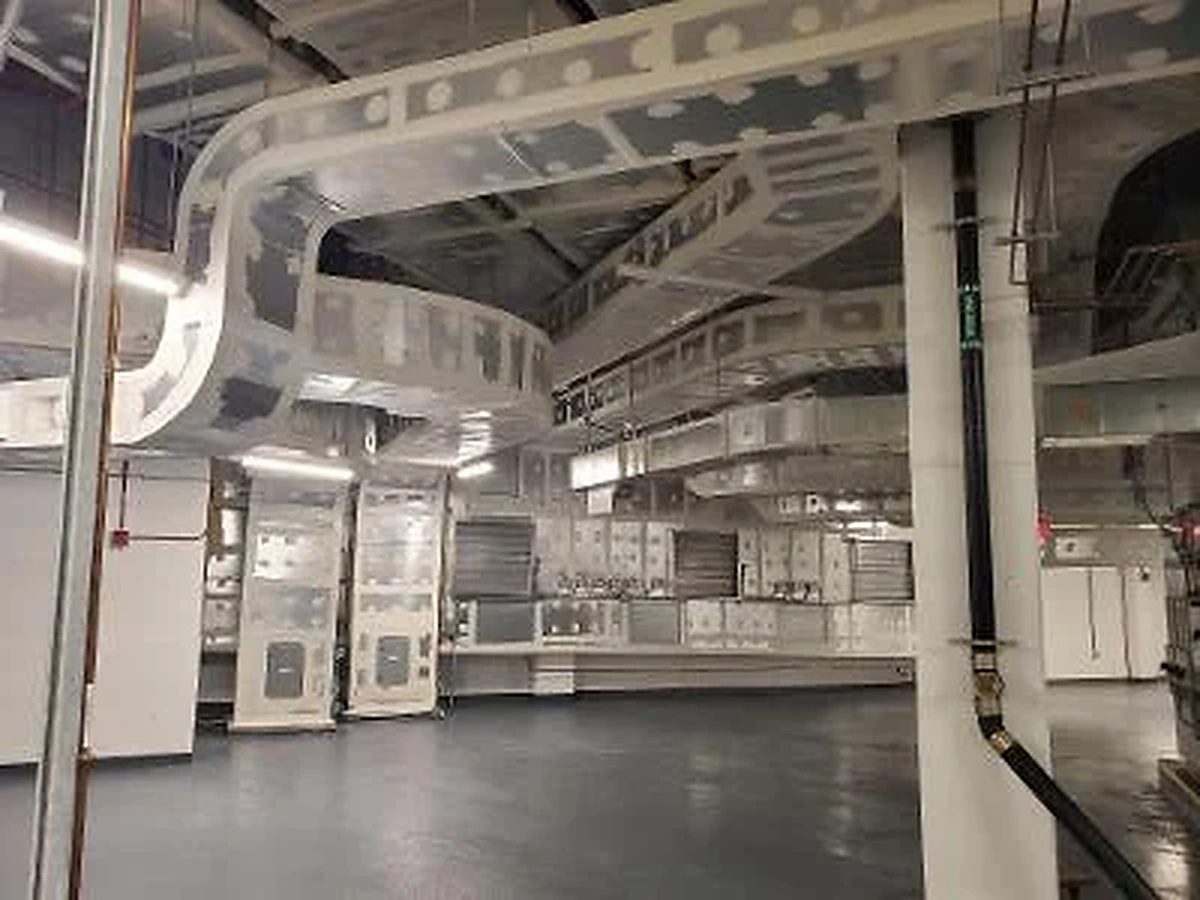
Walk the ceiling with the drawings before it closes.
Step 5: Run the installer's tests in sequence
NFPA 99 requires inspection and testing of new piped systems, additions, renovations, temporary installations and repaired systems [5k]. The installer performs these tests in order, with oil-free dry nitrogen [5l][6]:
- Initial blowdown to clear construction debris.
- Initial pressure test of each section at 1.5 times operating pressure and never less than 150 psi, while every joint is checked with an oxygen-safe leak detectant [5l].
- Cross-connection test with all systems at atmospheric pressure, then one system at a time charged to 50 psi to confirm only its outlets see pressure [5l].
- Piping purge test at each outlet until a clean white cloth shows no discoloration [5l].
- Standing pressure test, 24 hours at 20 percent above operating pressure, with leakage no more than 0.5 percent of starting pressure after temperature correction [5l].
- Standing vacuum test, 24 hours between 12 inches HgV and full vacuum, same limit [5l].
The 24-hour positive-pressure test must be witnessed by an ASSE 6020 inspector, an ASSE 6030 verifier or the authority having jurisdiction [5m].
Step 6: Medical gas system verification by an independent ASSE 6030 verifier
System verification under NFPA 99 section 5.1.12.3 is performed by an independent party other than the installing contractor, qualified to ASSE 6030 [7]. The verifier's scope covers standing pressure, cross-connection, valve, alarm, piping purge, piping particulate, piping purity, final tie-in, operational pressure, medical gas concentration and medical air purity tests, plus labeling, source equipment verification and the medical-surgical vacuum test [7][6].
The final tie-in test runs after new work joins a live system, the moment a renovation can cross-connect piping serving occupied beds. The concentration test at every outlet is what would have caught Bankstown, where the commissioning form recorded 100 percent oxygen at an outlet carrying none [12].
Keep the report. Joint Commission standard EC.02.05.09 requires that each piped medical gas and vacuum system's source, distribution, inlets and outlets, and protective alarms be maintained in a safe and reliable condition [10]; the verification report is that program's baseline.
Step 7: Coordinate the other trades and occupied-facility shutdowns
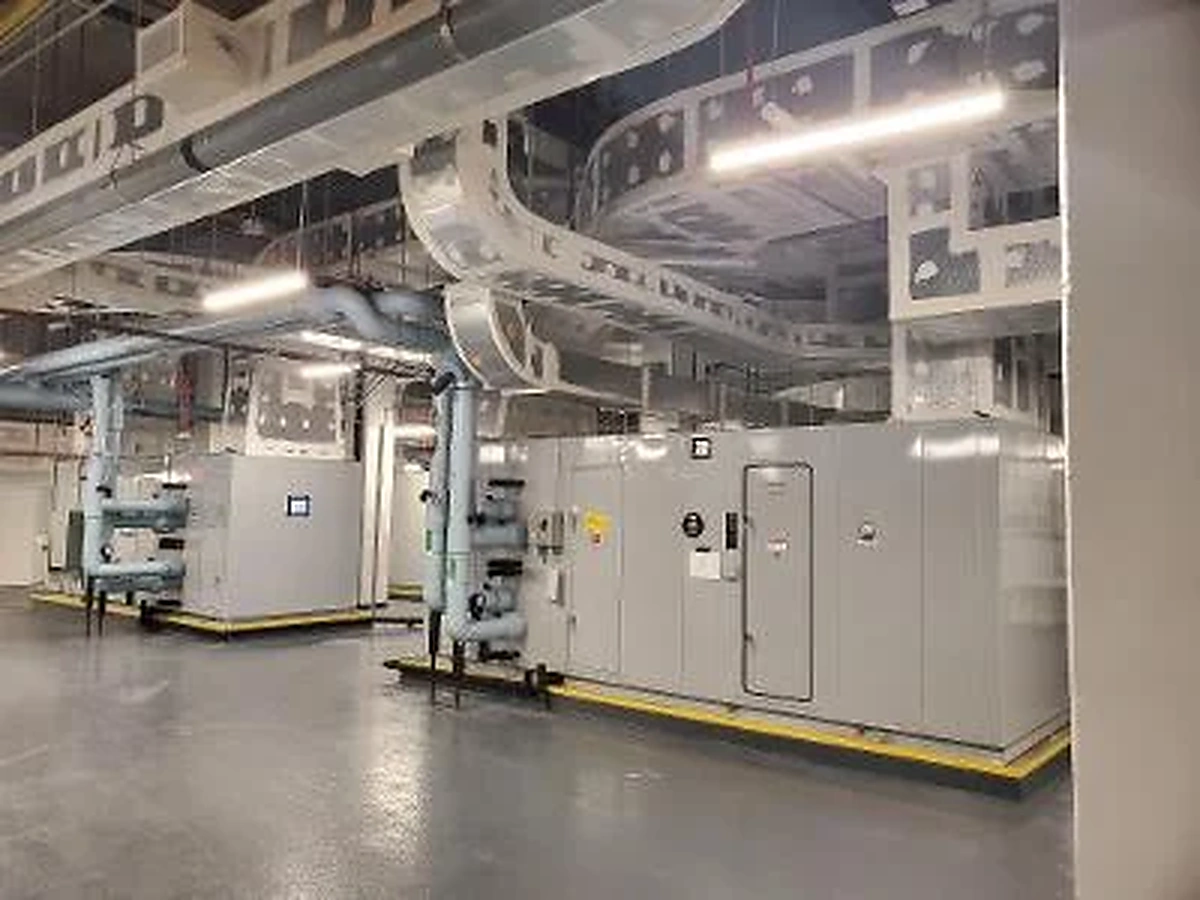
Medical gas piping shares ceilings with ductwork, sprinkler mains, cable tray and domestic water, and the zone valve and labeling rules limit where it can move. Three practices prevent most problems:
- Coordinate in the model. Lock zone valve box locations and riser paths before framing, and give the electrical contractor the alarm panel locations at the same time.
- Treat every tie-in as a controlled shutdown. The 2021 edition of NFPA 99 added a documented permit-to-work system with testing of the affected portion afterward [9]. The written request should name the valves to be closed, the outlets affected, clinical sign-off, cylinder backup and the retest.
- Keep the installer and the tester separate. The NSW Chief Health Officer's third recommendation was that contractor engagement rules require "a separation of the installer and the tester" [12]. NFPA 99 builds this in through independent verification; give the verifier the time to do it.
Florida plan review: the AHCA Office of Plans and Construction
Under section 395.0163, Florida Statutes, a hospital licensee planning an alteration, addition or new construction must submit plans and specifications to the Agency for Health Care Administration before commencing the work; the agency has 60 days from receipt of the fee, with one 15-day extension, and plans are deemed approved if it does not act [13]. AHCA's Office of Plans and Construction must approve the work before any construction activity; Stage I and Stage II reviews are optional, Stage III construction-document approval is required, and the office surveys the work at 80 and 100 percent completion [14]. Settle medical gas scope before Stage III; outlet counts, zone valve locations and alarm panels are what surveyors check against the drawings.
Common mistakes to avoid
Treating medical gas as a plumbing line item. The scope splits across bid packages and nobody owns the alarms, source start-up or verifier.
Closing ceilings before the labeling walk. Labels every 20 feet and on both sides of walls are easy to check with the ceiling open and hard afterward [5j].
Skipping the retest after a "minor" repair. NFPA 99 tests repaired systems and renovations, not only new work [5k].
What success looks like
You hold a verifier's report with every test passed, installer and brazer records matching the people on site, a labeled system traceable from source to outlet on the as-builts, and a maintenance team with ASSE 6040 coverage. The stretch goal is a written medical gas management program under EC.02.05.09.
Conclusion
Medical gas piping installation under NFPA 99 is a sequence: category and edition, scope, people, installation checks, installer tests, independent verification and controlled shutdowns. Each step exists because a skipped one has reached a patient [11][12]. Blume Mechanical installs HVAC, plumbing and piping, including medical gas scope, for Central Florida healthcare facilities. See our healthcare work and HVAC, plumbing and piping department, then contact the team about defining the medical gas package.
Frequently asked questions
What is a Category 1 medical gas system?
One whose failure is likely to cause major injury or death of patients, staff or visitors [1]. Operating rooms, critical care and emergency departments fall here.
Does the installing contractor's own testing satisfy NFPA 99?
No. The installer's tests are required, but verification must then be performed by an independent ASSE 6030 party other than the installing contractor [7][8].
Which edition of NFPA 99 applies to my hospital?
CMS enforces the 2012 edition for Medicare certification [3][4]; your state code may adopt a newer one, and NFPA's current edition is 2024 [4]. Build to the most restrictive requirement.
How long does medical gas verification take?
The installer's two standing tests take 24 hours each [5l], and the verifier's testing scales with outlet count. Plan on weeks between piping completion and occupancy.
Is an ASSE 6010 installer required for every medical gas job?
NFPA 99 requires ASSE 6010 certification for installers of piped distribution systems and of piping for pump, compressor and manifold sources [5h]. Facility staff may do the work only if they meet the same requirements [5h].
Sources
- [1] King County (Washington) Public Health, "Medical gas," citing NFPA 99-2018 section 4.1 risk categories
- [2] ASSE International, "Current Professional Qualifications Standards," ASSE/IAPMO/ANSI Series 6000-2024
- [3] Centers for Medicare & Medicaid Services, "Life Safety Code & Health Care Facilities Code" (final rule published May 4, 2016; effective July 5, 2016)
- [4] Val Ziavras and Brian O'Connor, "A preview of changes to NFPA codes and standards," Health Facilities Management, October 30, 2023
- [5] California Plumbing Code, Chapter 13, Health Care Facilities and Medical Gas and Medical Vacuum Systems (reproduces NFPA 99 Chapter 5 with bracketed section citations), as published at gocodebook.com
- [5a] 1307.1 Terms (gases covered; NFPA 99:5.1.1.3)
- [5b] 1314.10 Zone valves
- [5c] 1314.3 Valve labeling (NFPA 99:5.1.4.1.3)
- [5d] 1317.1 Category 1 alarms, master alarm (NFPA 99:5.1.9.2)
- [5e] 1318.4 Tubes for medical gas systems (ASTM B819)
- [5f] 1321.4 Copper-to-copper joints (BCuP, no flux)
- [5g] 1321.10 Nitrogen purge
- [5h] 1323.10 Qualifications of installers (ASSE 6010; NFPA 99:5.1.10.11.10)
- [5i] 1323.11 Qualification of brazing procedures and brazers
- [5j] 1323.13 Labeling and identification of piping
- [5k] 1324.1 Inspection and testing, where required
- [5l] 1324.5 Initial tests (pressure, cross-connection, purge, standing pressure and vacuum)
- [5m] Installer qualifications, documentation and records summary (witnessing of standing tests, 1324.5.4.7; manufacturer's instructions, 1323.8)
- [5n] Chapter 2 Definitions, "Medical support gas" and "Medical-surgical vacuum" (WAGD)
- [6] "Mandatory Testing of Medical Gas Systems," Plumbing & Mechanical, September 1, 2004 (installer and verifier test sequence; ASSE 6030)
- [7] City of Tucson, Planning and Development Services, "Special Inspection Certificate: Medical Gas" (NFPA 99 section 5.1.12.3; verifier test list)
- [8] New Mexico Administrative Code 14.9.5, "Medical Gas and Vacuum System Installation and Professional Qualifications Standards," effective November 15, 2019
- [9] "The medical gas code updates within NFPA 99," Consulting-Specifying Engineer, October 11, 2022
- [10] The Joint Commission, Standards FAQ, Environment of Care, EC.02.05.09 (piped medical gas and vacuum systems)
- [11] U.S. Food and Drug Administration, "Guidance for Hospitals, Nursing Homes, and Other Health Care Facilities: FDA Public Health Advisory," March 2001
- [12] NSW Health, Chief Health Officer, "Bankstown-Lidcombe Hospital Medical Gases Incident: Final Report," August 2016. (overview page: ). https://www.health.nsw.gov.au/Hospitals/Documents/bankstown-lidcombe-incident-final-report.pdf
- [13] Florida Statutes section 395.0163, "Construction inspections; plan submission and approval; fees."
- [14] Florida Agency for Health Care Administration, "Office of Plans and Construction."